Huge congratulations to Camphill Wakefield – they’re showing their commitment to improving EDI in their workplace by applying to become accrEDIted™ .
Starting this journey shows a lasting commitment to improving EDI for their people. They are dedicated to creating a thriving and inclusive community that empowers individuals with special educational needs and disabilities to lead fulfilling lives.
Their mission is simple yet profound: to empower and inspire young people by providing a practical and purposeful, vocational and creative environment. They foster a sense of belonging, dignity, and purpose for all students and work to develop each student’s agency and believe that every individual deserves the opportunity to grow, learn, and be embraced for their abilities, regardless of their challenges.
Becoming accrEDIted™ shows they care as much about their employees as their students.
Interested to know what starting the journey could mean for you? Please get in touch to find out more.
Founded by the fantastic, multi-talented Hira Ali, Advancing Your Potential (AYP) is a leadership and inclusion consultancy with a core specialisation in allyship, women’s leadership, ethnic minority leadership development, and intercultural communication. Through their flagship programmes, they help organisations build inclusive cultures where diverse talent thrives. Her Allies equips organisations with the tools, training, and coaching materials to embed everyday allyship, enabling employees to advocate for one another and create supportive workplaces. Her Way to the Top empowers women at every stage of their careers with workshops, coaching, and resources that help them overcome barriers, amplify their voices, and lead with confidence. AYP also deliver tailored workshops, executive coaching, surveys, benchmarking, focus groups, and EDI consultancy.
Our Community is a directory of amazing specialists, who see the need for our impartial accreditation, and can help with all sorts of EDI related issues and challenges that you might be encountering on your journey.
Check the Community out here or get in touch for more information.
At EDI Accreditation, we take our independence and impartiality very seriously.
Our accreditation was designed to be thorough and meaningful.
Our Accreditation Panel are a key part of what makes us different. Every accreditation is reviewed and approved by our panel, before the result is awarded, to ensure our standards never slip – and nothing is missed.
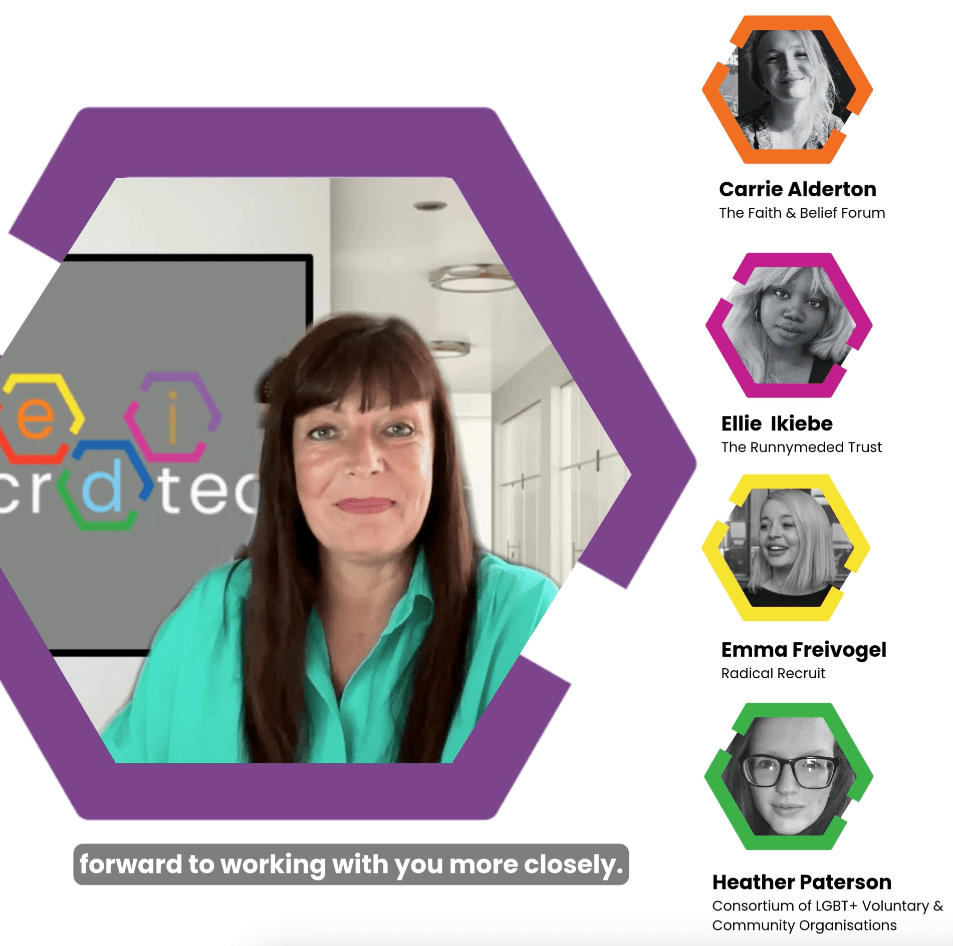
We are delighted, with the addition of our new Charity Partners, this also means some new faces on the panel too!
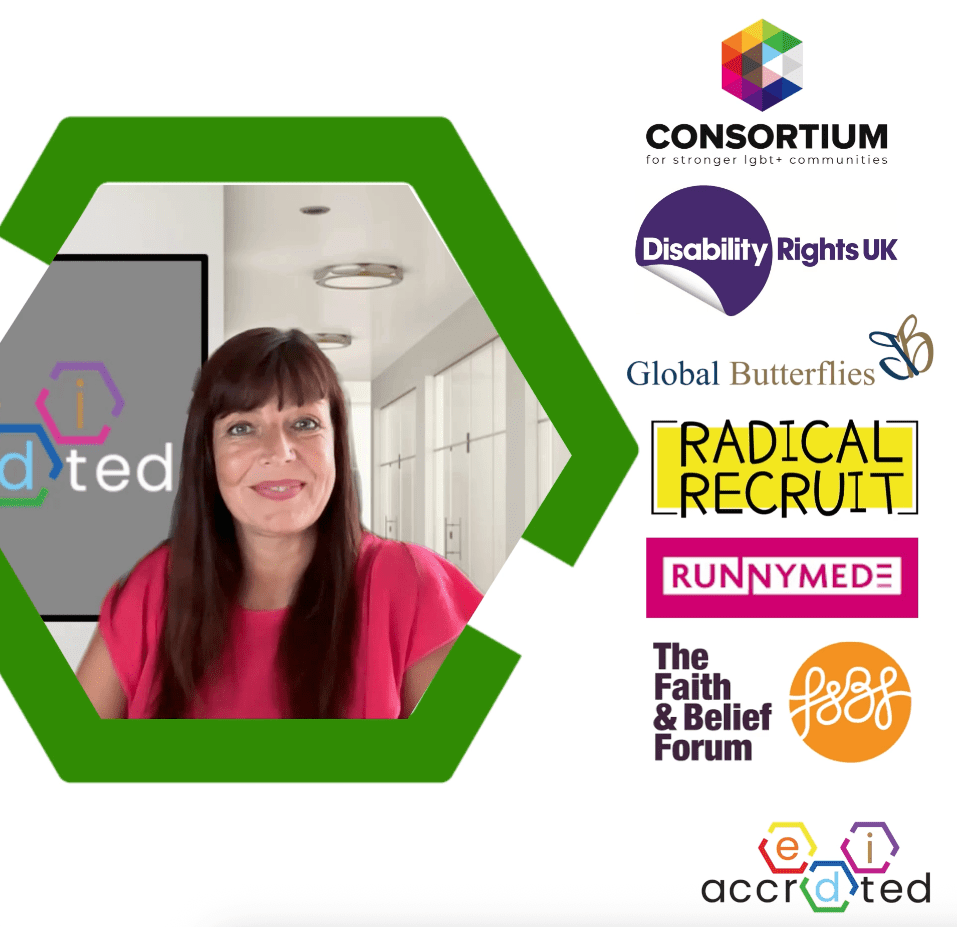
The role our our Partners is to collaborate with us, to ensure our accreditation meets the needs of the communities they serve. They are our subject matter experts – and keep our knowledge of legislation, topical issues and challenges facing their communities up to date and informed.
Our Partners also appoint a representative to sit on our Accreditation Panel.
In return, we donate a percentage of our profits to our Partners to support the essential work they do and to make sure every accreditation, does good for the world, as well as the workplace.
We are thrilled to welcome Male Allies UK to the accrEDIted™ Community.
Founded by the amazing Lee Chambers Male Allies UK exist to engage men in inclusion, building allyship skills and close gender gaps in both directions. They do this through workshops, training, consulting and facilitating spaces, with their work being research-led, evidence-based and focused on practical, relevant action. Male Allies UK have clients across 13 industries, understand commonalties as well as sector specific challenges. Led by business psychologist Lee, Male Allies UK uses it’s profit to fund work with boys in schools, with it’s research report into UK boys being launched in Parliament in October 2025. They also fund a number of women’s initiatives, with a particular focus on access to services for marginalised women and violence reduction. Their mission is to make gender unity a reality.
Our Community is a directory of amazing specialists, who see the need for our impartial accreditation, and can help with all sorts of EDI related issues and challenges that you might be encountering on your journey.
Check the Community out here or get in touch for more information.
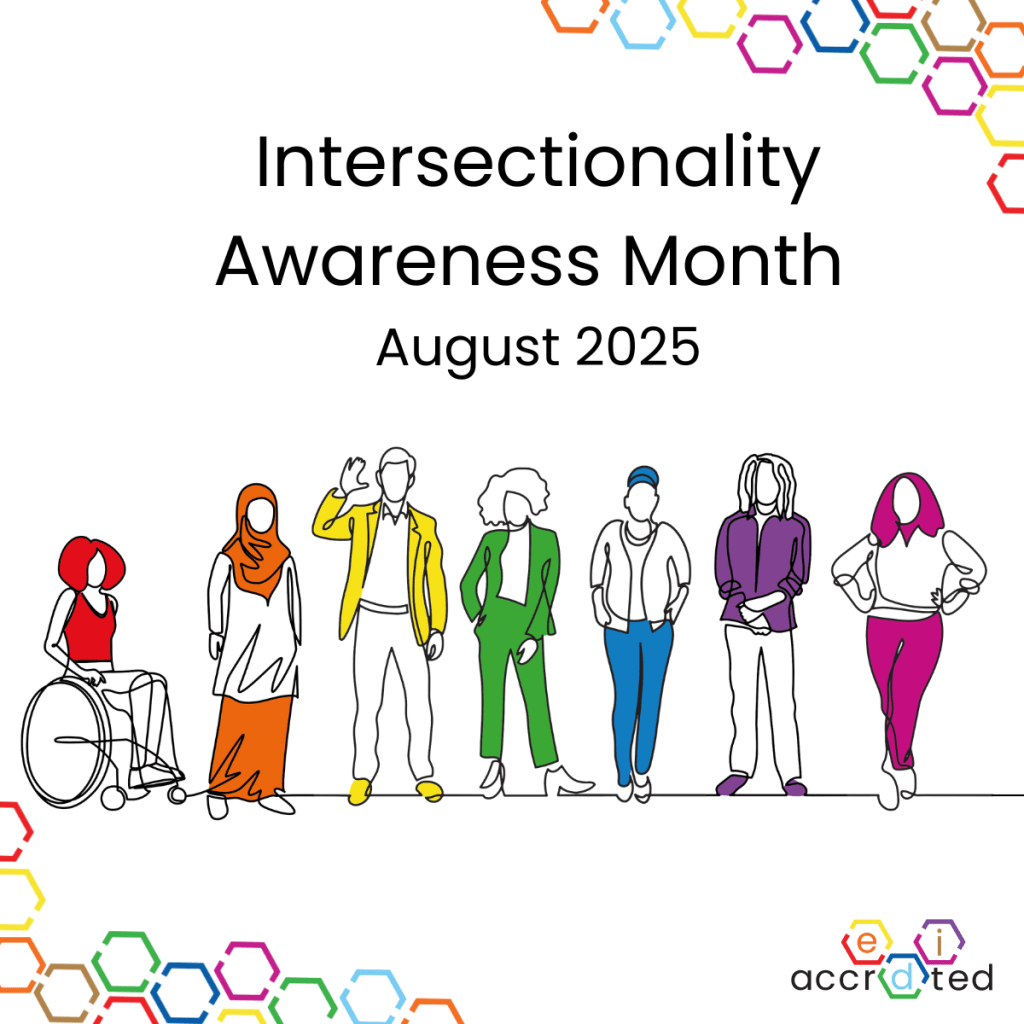
Kimberlé Crenshaw, a Columbia University law professor, is recognised for first using the term Intersectionality, in 1989 in her paper, “Demarginalizing the Intersection of Race and Sex.
Intersectionality recognises that an individual’s identity is not a single story but a rich tapestry woven from various threads of ethnicity, gender, sexual orientation, disability, religion & belief and other protected characteristics and social categorisations.
Each thread affects the way we experience and navigate the world.
For Equality, Diversity & Inclusion initiatives to be successful, it is essential they are approached intersectionally, taking into account the whole person at the same time.
Founded by the amazing Mo Kanjilal, a long-standing Community member, we are so pleased to include her exciting new venture with Kaia Allen-Bevan 🧡 in our directory of expert resources.
At Edge Of Difference, they train boldly, include differently and change everything. They are a new diversity, equity and inclusion training company, helping leaders to listen to voices from the edges to understand how to drive diversity, equity and inclusion across teams.
Our Community is a directory of amazing specialists that can help with all sorts of EDI related issues and challenges that you might be encountering on your journey.
Check the Community out here or get in touch for more information.
Founded by our long-standing Community member, the fantastic Sal Naseem FRSA we are delighted to feature his new company in the Community.
Sal founded True North Leadership™️ to help leaders discover their True North and transform organisations through unlocking moral courage in their leadership. He does this through powerful keynotes, bespoke leadership workshops/programmes, and one-to-one coaching.
We know EDI work takes commitment and moral courage from leaders, which is why it is wonderful to have Sal’s expertise on hand to help guide and support them.
Our Community is a directory of amazing specialists that can help with all sorts of EDI related issues and challenges that you might be encountering on your journey.
Check the Community out here or get in touch for more information.
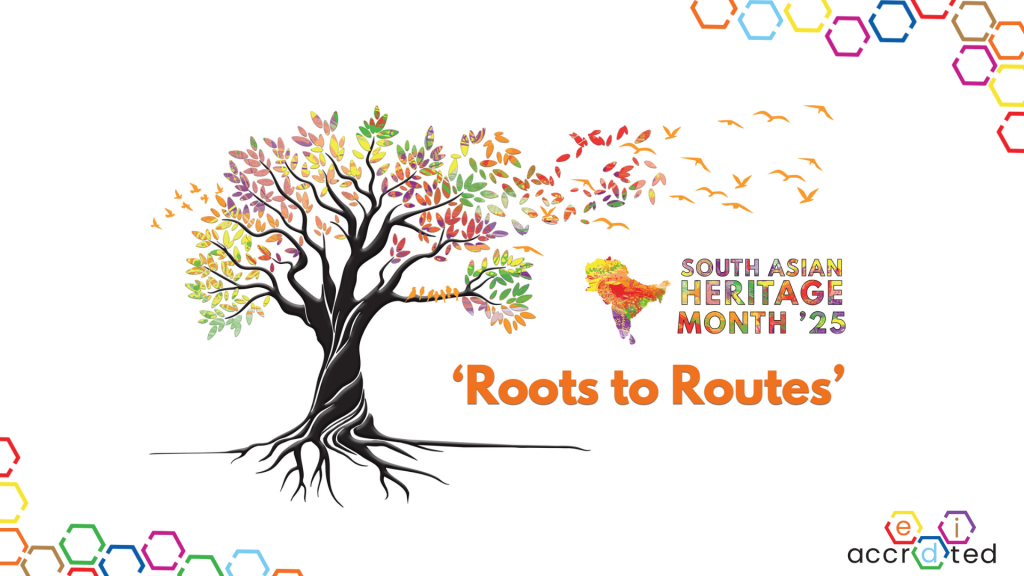
Every year from July 18 to August 17, we celebrate South Asian Heritage Month—a time to honour the rich tapestry of cultures, histories, and contributions of people with roots in South Asia. This includes communities from Afghanistan, Bangladesh, Bhutan, India, Maldives, Nepal, Pakistan, and Sri Lanka.
The theme for South Asian Heritage Month in 2025 is “Roots to Routes“. This theme explores the journeys that shape South Asian identities, focusing on how migration, heritage, and personal stories influence who we are today.
Award winning Journalist, Broadcaster and Author Babita Sharma is a Patron of the South Asian Heritage Trust. Her first book, The Corner Shop (followed her BBC documentary ‘Booze, Beans & Bhajis: The Story of the Corner Shop’), is a brilliant look at “Roots to Routes”, chronicling the human stories behind the British corner shop. It explores part of British Asian life that is often stereotyped but plays a crucial part in British life and communities.
Many South Asian communities have shaped the social, cultural, and economic fabric of the UK and beyond. From the arts and sciences to politics, cuisine, and activism, their influence is woven into everyday life.
This month is not just about celebration—it’s also about reflection, education, and empowerment. It’s a chance to:
Celebrate identity: Embrace the diversity within South Asian cultures, languages, and traditions.
Share stories: Honour the journeys of migration, resilience, and belonging.
Challenge stereotypes: Break down misconceptions and amplify underrepresented voices.
Build solidarity: Connect across communities and generations.
In the workplace, this month is also a great opportunity to celebrate colleagues of South Asian heritage, to learn about their culture and stories to increase understanding and create a better sense of inclusion and belonging.
Here are a few ways you can get involved this month:
Host or attend local events: From Lunch and Learns, Indian head massage workshops or yoga sessions, film screenings to panel discussions, there are many community-led events happening across the UK.
Explore the cuisine: Team lunches, trying different South Asian cuisines. Or why not try cooking a dish from a different South Asian country each week.
Read South Asian authors: Dive into works by writers like Arundhati Roy, Kamila Shamsie, Nikesh Shukla, Hira Ali, Moni Mohsin or Babita Sharma.
Educate yourself and others: Learn about the history of South Asian migration, colonialism, and the contributions of South Asians in the UK and in your community. The Migration Museum in London makes for a great day out!
South Asian Heritage Month is a celebration of identity, resilience, and joy. It’s a reminder that heritage is not just about the past—it’s about how we carry it forward, shape it, and share it with others.
Let’s use this month to listen, learn, and uplift. Because when we honour each other’s stories, we build a more inclusive and compassionate world and workplace.


 EDI News