For Non-Binary Awareness Day we shared a brilliant post from Adelle Barker, which simply takes away confusion and explains the importance of understanding and respecting non-binary people 💛 🤍 💜 🖤
Today marks the 77th anniversary of the arrival of the HMT Empire Windrush at Tilbury Docks in Essex. Onboard were over 1,000 passengers, more than 800 of them from Caribbean nations such as Jamaica, Trinidad, and Barbados.
They were the first of tens of thousands of workers who came to Britain as citizens of the UK and Colonies, invited to help rebuild the country after World War II. This moment marked the beginning of what would become known as the Windrush Generation—a group whose legacy is deeply woven into the fabric of modern Britain and the families of EDI Accreditation founders too.
A Legacy of Contribution
The Windrush Generation played a pivotal role in shaping post-war Britain. They filled critical labour shortages, working in sectors such as:
Healthcare: Many became nurses and support staff in the newly formed NHS.
Transport: Others worked as bus drivers, conductors, and railway workers.
Construction and Industry: They helped build the infrastructure of a recovering nation.
Beyond their economic contributions, the Windrush Generation enriched British culture through music, food, literature, and activism.
Despite having been invited to the UK, promised opportunities for a better life, many people faced discrimination, hostility and hardship when they arrived.
The stories of our own families, arriving here as teenagers full of hope and optimism are hard to hear, but inspiring. Gruelling shift work, families living in one room, facing daily racism and abuse, it is a wonder they stayed at all. But we are so glad they did and are thankful for our rich history and fantastic families, because of their determination and sacrifice.
The Windrush Scandal: A Betrayal of Trust
Despite their contributions, many members of the Windrush Generation faced a devastating betrayal decades later. In 2018, it emerged that hundreds of long-term UK residents—many of whom had arrived as children—were wrongly detained, denied healthcare, employment, and housing, and even deported by the Home Office.
The Windrush Scandal was the result of the UK’s “hostile environment” immigration policies, which required individuals to prove their right to live in the UK. Many Windrush migrants, having arrived as British citizens, had never been issued formal documentation. The scandal prompted public outrage and led to the resignation of then-Home Secretary Amber Rudd.
An independent report by Wendy Williams in March 2020 described the scandal as “foreseeable and avoidable,” highlighting systemic failures and institutional racism.
In 2024 a review, also conducted by Williams, released after legal pressure, concluded that over 30 years of racist immigration legislation directly contributed to the Windrush Scandal.
The report found that:
Immigration laws were deliberately designed to exclude people of colour, particularly those from the Caribbean and other former colonies.
These policies were not race-neutral; they were shaped by a post-imperial mindset that sought to limit non-white immigration while maintaining economic benefits from former colonies.
Despite a formal apology from the UK Government and the creation of the Windrush Compensation Scheme, many affected people are still awaiting full compensation and justice. With Professor Patrick Vernon OBE FrHistS, who campaigned for the national day of recognition calling for a public inquiry into the Windrush Scandal.
Commemoration and Moving Forward
In response to the scandal, the UK government established Windrush Day to honour the Windrush Generation and their descendants. Initiatives like the Windrush Day Grant Scheme and the unveiling of the National Windrush Monument at Waterloo Station in 2022 aim to preserve their legacy and educate future generations, but whilst so many are still fighting for justice, this feels performative and tokenistic.
So, as we commemorate the 77th anniversary, and give thanks for our families sacrifices and strength, it is not only a time to celebrate the Windrush Generation’s contributions, but a time to remind people of the ongoing fight for racial justice for the Windrush Generation and their descendants. You can support the fight here: https://justice4windrush.org/
Today is International Day for Countering Hate Speech.
This year, the UN’s focus for the day is about AI and the speed with which that can acceleratee and amplify hate speech. You can read more about their strategy and plan of action here.
For our founders, challenging discrimination and calling out hate speech is not just a day job, it’s in our DNA.
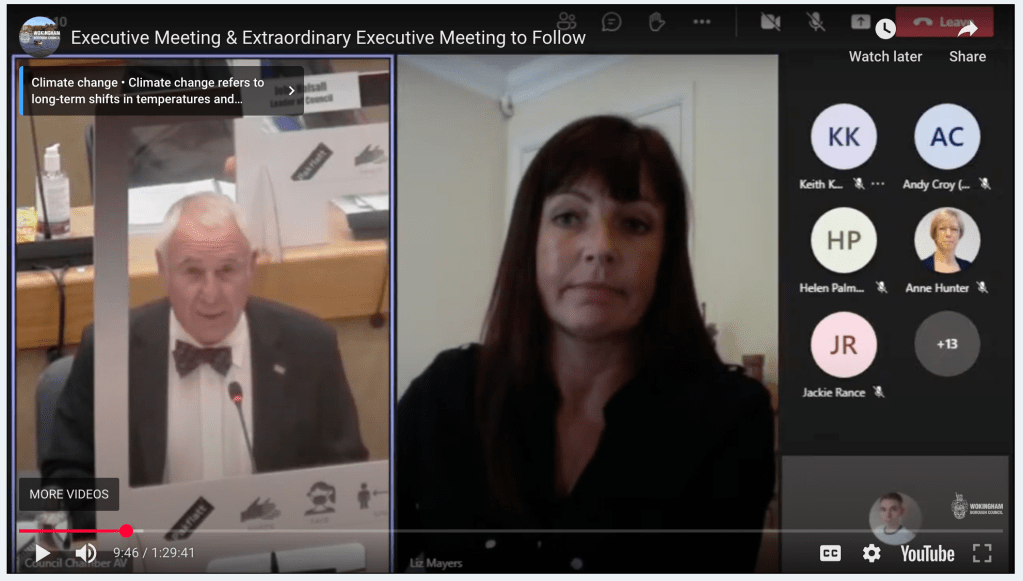
This image is taken from an on-line council meeting in 2021, where Liz Mayers called out the (then) Leader of a council for racism and inciting racial hatred.
Refugees and asylum seekers are often a contentious topic, being used and manipulated by some political parties to win votes. But they are not a “topic” they are people.
At times of economic hardship, it is easy to look for someone to blame. However, the story we are being fed about refugees is nonsense.
As the UK continues to debate immigration policy, one narrative conveniently overlooked is the positive economic impact of refugees. Far from being a burden, refugees contribute significantly to the UK’s economy—through work, entrepreneurship, taxes, and cultural enrichment.
Refugees Fill Critical Labour Gaps
In sectors like healthcare, social care, agriculture, and hospitality, refugees often take on roles that are hard to fill. Many arrive with professional skills and qualifications, and with the right support, they integrate quickly into the workforce. According to the Migration Observatory, immigrants—including refugees—have a net positive fiscal impact over time, especially when they are able to work and contribute taxes.
The UK government’s 2025 immigration reforms, outlined in the white paper Restoring Control over the Immigration System, have been framed as a necessary recalibration of national sovereignty and fairness. But behind the rhetoric lies a system that many human rights advocates describe as cruel and dehumanising.
Among the most alarming changes is the prohibition of citizenship for anyone arriving via irregular routes, including small boat crossings. This effectively bars thousands of refugees—many of whom are fleeing war, persecution, or trafficking—from ever becoming British citizens, regardless of their need or the legitimacy of their asylum claims.
The reforms also extend the path to settlement from five to ten years, leaving even long-term residents—teachers, NHS staff, care workers—in a prolonged state of legal limbo. The message is clear: belonging must be “earned,” but the criteria are arbitrary and exclusionary.
Victims of modern slavery now face stricter evidentiary requirements to access support, with rejection rates soaring. The government’s approach treats survivors as security risks rather than individuals in need of protection.
Entrepreneurship and Innovation
Refugees are twice as likely to start businesses as native-born citizens. Sadly, because of discrimination against refugees, it is often harder for them to secure appropriate employment (there are many examples of highly qualified doctors, lawyers, engineers having to accept manual or low skilled jobs) so becoming a business owner is preferrable. These businesses not only create jobs but also stimulate local economies. From restaurants and tech startups to retail shops and logistics firms, refugee-led enterprises are thriving across the UK.
Boosting Local Economies
Refugees are often forced to settle in areas facing economic decline. Their presence can revitalise communities, increase demand for housing and services, and bring new life to high streets. According to the Migration Exchange report, the growth of refugee-focused charities and services has also been linked to broader community development.
Long-Term Fiscal Gains
While initial support costs exist, studies show that over time, refugees contribute more in taxes than they receive in benefits. A 2025 report by the UK Parliament notes that although in-donor refugee costs have risen, the long-term economic integration of refugees offsets these expenses.
A Time for Solidarity Amid Hostile Borders
Welcoming refugees is not just a moral imperative—it’s also an economic opportunity. With the right policies—access to work, training, and legal stability—refugees can and do thrive. And when they do, so does the UK.
Each year, Refugee Week offers a moment of reflection, celebration, and solidarity for people who have been forced to flee their homes. In this climate, Refugee Week is more vital than ever. It is a reminder that refugees are not statistics or threats—they are people. People with dreams, talents, and the right to live in safety and dignity.
This week let’s amplify refugee voices, challenge harmful narratives, and demand policies rooted in compassion and justice. Let’s remind our leaders that human rights are not optional, and that the UK’s strength lies not in exclusion, but in its capacity to welcome.
Visit Refugee Week to find out how to get involved with their Simple Acts and resources. Or, Channel 4 recently aired the documentary Go Back to Where You Came From, where six British people got to experience refugee life, if you do nothing else, please take a watch and remember the human beings behind the headlines.
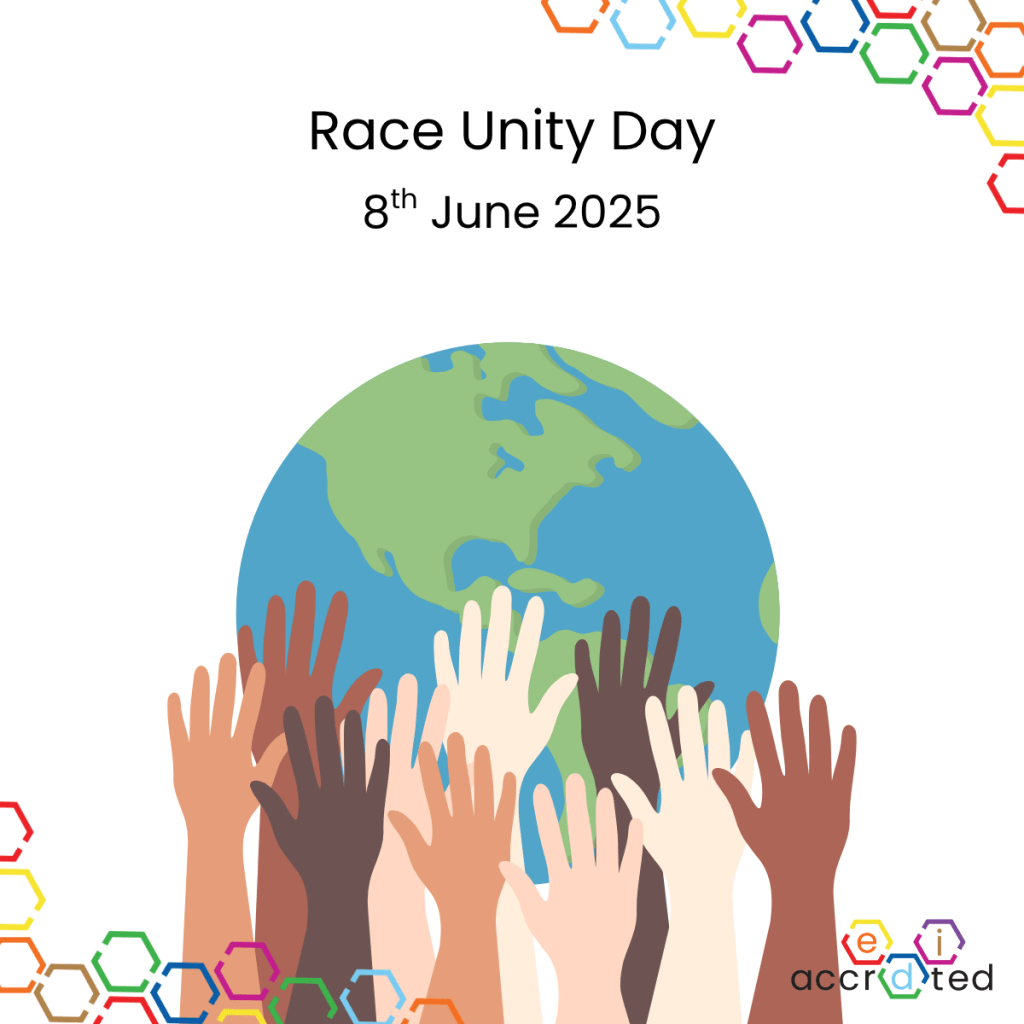
Race Unity Day is observed annually on the second Sunday of June, which falls on the 8th June this year.
Race Unity Day started in 1957 in the United States by the Bahá’í National Spiritual Assembly. The Baháʼí Faith (which has 9-10 million followers globally) believes in the oneness of God, religion and humanity. They believe that God periodically reveals His will through divine messengers, like Abraham, Moses, Jesus, and Muhammad, with Baháʼu’lláh being the most recent. The faith emphasises unity, progress, and service, advocating for the abolition of prejudice and the pursuit of a just and harmonious world. The Bahá’í understood that racism is a hindrance to peace, so they started this day to promote racial harmony and understanding.
This day, along with other events like Race Equality Week and the International Day for the Elimination of Racial Discrimination, aims to promote understanding and unity among different racial and ethnic groups. So whatever your faith, we hope you use this day as reminder to keep working towards unity.
Founded by the fantastic Jay Jupp they help organisations build cultures where people and business grow stronger — together. They specialise in leadership and culture change that drives lasting impact: a thriving workforce, a culture of empowerment, consistent contribution, and a truly equitable workplace. Their work is rooted in the belief that people lead best when life and work are aligned. Through coaching, insight, and inclusive development, Inner Reach Coaching help organisations lead where life and work collide.
Our Community is a directory of amazing specialists that can help with all sorts of EDI related issues and challenges that you might be encountering on your journey.
Access the Community of specialist resources here.
Lauren Davies, Head of Operation said “At Genfit we are proud to have achieved an EDI (Equality, Diversity and Inclusion) accreditation as we feel it demonstrates our commitment to creating a positive and inclusive environment for all. The whole process was made quick and painless by Liz and the team, with their expert knowledge and guidance.”
Knowing how to measure and improve EDI performance has always been a complex challenge. EDI Accreditation Ltd was created to help organisations navigate these challenges and focus on continuous improvement, as well as celebrating and recognising their achievements.
Today is World Day for Cultural Diversity for Dialogue & Development 🌍
There is overwhelming evidence that diverse teams are good for business (despite what Trump and co. would like us to think!).
Yet companies often struggle to move from dialogue, or performative celebrations, to meaningful development and improvement.
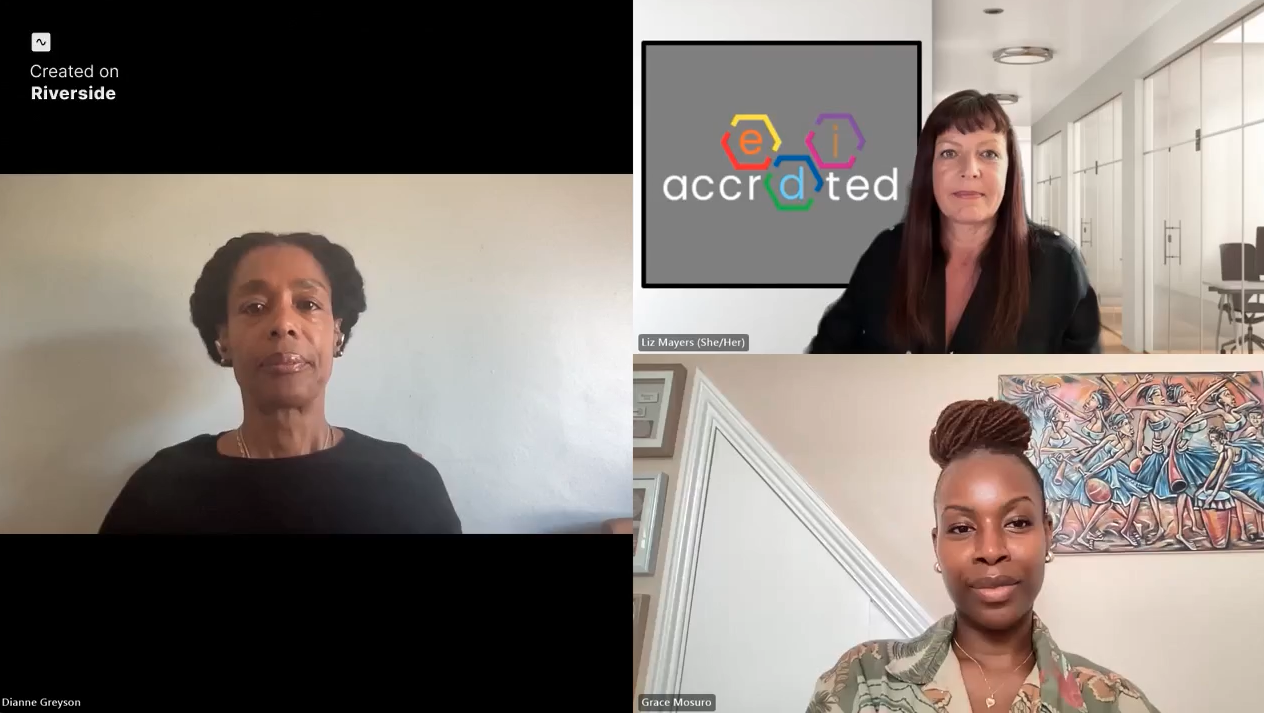
This conversation explores how organisations can really start shifting the needle through intentional action. 🧮 Whether quotas are the answer? 💪 What rolling up your sleeves and doing the work looks like? 😴 And if you exhaust your “only’s”?
During our “In Conversation” series, Co-founder Liz Mayers explores a wide range of equality, diversity & inclusion related topics with our Community of experts, for fun and learning.
The #EthnicityPayGap Campaign was established in 2018 by the awesome Dianne Greyson. Its main aim and purpose is to raise awareness of the issues relating to the Ethnicity Pay Gap and to encourage the government to make Ethnicity Pay Gap reporting mandatory.
The Campaign is also calling on the government to ensure that businesses fully demonstrate that they are taking every action to close the gap. Correspondingly we call for clear guidelines on reporting to help support businesses to understand how to produce pay gap analysis that is meaningful and actionable.
We empower employee voice to enable them to be heard and advocate for representation at all levels of an organisation, making a way for improved outcomes for Black, Asian and other minoritised groups.
The #EthnicityPayGap Campaign is a beacon to those who wish to make a positive change.
Our Community is a directory of amazing specialists that can help with all sorts of EDI related issues and challenges that you might be encountering on your journey. So whilst The #EthnicityPayGap Campaign is a little different to our other Community members, we encourage ethical organisations to support the campaign and take action now to ensure they are not contributing to the Ethnicity Pay Gap.
Access the Community of specialist resources here.
Founded by the amazing Dianne Greyson they provide Strategic Consultancy, developing and executing high-level strategic plans to improve overall performance of long-term business goals and to improve cultural change within an organisation. Equilibrium Mediation Consulting Ltd provides high-level project support on specific change management strategies. Taking a “critical friend” approach that allows you to evaluate your strategy at critical stages of any project.
Our Community is a directory of amazing specialists that can help with all sorts of EDI related issues and challenges that you might be encountering on your journey.
Access the Community of specialist resources here.



 EDI News