Tag: news

  • Celebrating South Asian Heritage Month 2025: Honouring Culture, Identity & Legacy


    Every year from July 18 to August 17, we celebrate South Asian Heritage Month—a time to honour the rich tapestry of cultures, histories, and contributions of people with roots in South Asia. This includes communities from Afghanistan, Bangladesh, Bhutan, India, Maldives, Nepal, Pakistan, and Sri Lanka.

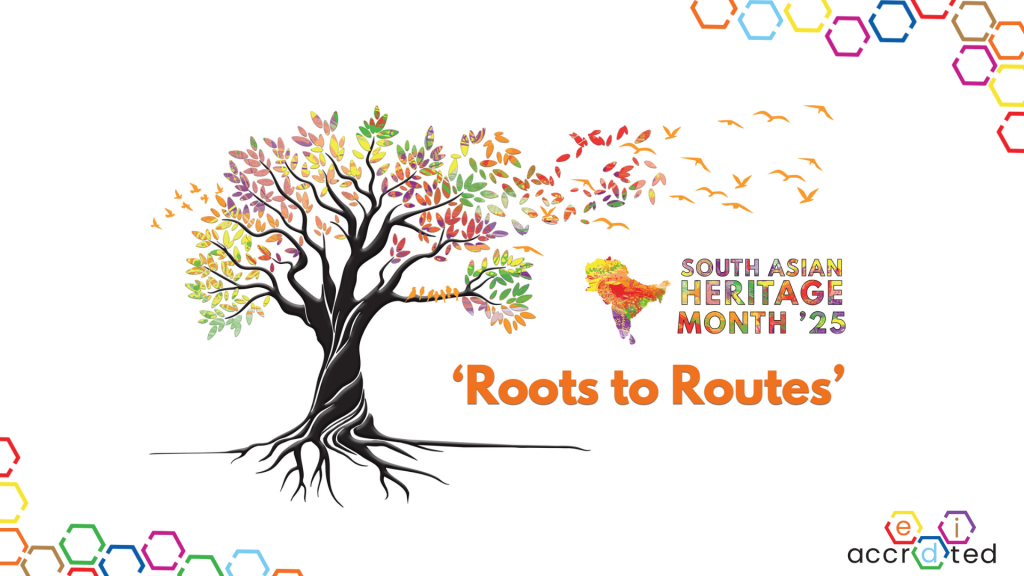
    The theme for South Asian Heritage Month in 2025 is “Roots to Routes“. This theme explores the journeys that shape South Asian identities, focusing on how migration, heritage, and personal stories influence who we are today.

    Award winning Journalist, Broadcaster and Author Babita Sharma is a Patron of the South Asian Heritage Trust. Her first book, The Corner Shop (followed her BBC documentary ‘Booze, Beans & Bhajis: The Story of the Corner Shop’), is a brilliant look at “Roots to Routes”, chronicling the human stories behind the British corner shop. It explores part of British Asian life that is often stereotyped but plays a crucial part in British life and communities.

    Many South Asian communities have shaped the social, cultural, and economic fabric of the UK and beyond. From the arts and sciences to politics, cuisine, and activism, their influence is woven into everyday life.

    This month is not just about celebration—it’s also about reflection, education, and empowerment. It’s a chance to:

    • Celebrate identity: Embrace the diversity within South Asian cultures, languages, and traditions.
    • Share stories: Honour the journeys of migration, resilience, and belonging.
    • Challenge stereotypes: Break down misconceptions and amplify underrepresented voices.
    • Build solidarity: Connect across communities and generations.

    In the workplace, this month is also a great opportunity to celebrate colleagues of South Asian heritage, to learn about their culture and stories to increase understanding and create a better sense of inclusion and belonging.

    Here are a few ways you can get involved this month:

    • Host or attend local events: From Lunch and Learns, Indian head massage workshops or yoga sessions, film screenings to panel discussions, there are many community-led events happening across the UK.
    • Explore the cuisine: Team lunches, trying different South Asian cuisines. Or why not try cooking a dish from a different South Asian country each week.
    • Read South Asian authors: Dive into works by writers like Arundhati Roy, Kamila Shamsie, Nikesh Shukla, Hira Ali, Moni Mohsin or Babita Sharma.
    • Educate yourself and others: Learn about the history of South Asian migration, colonialism, and the contributions of South Asians in the UK and in your community. The Migration Museum in London makes for a great day out!
    • Visit https://southasianheritage.org.uk/ for more ideas.

    South Asian Heritage Month is a celebration of identity, resilience, and joy. It’s a reminder that heritage is not just about the past—it’s about how we carry it forward, shape it, and share it with others.

    Let’s use this month to listen, learn, and uplift. Because when we honour each other’s stories, we build a more inclusive and compassionate world and workplace.

    We’re celebrating and thanking our Partners, our Team, Panel and Community Members, our network, friends and family of South Asian Heritage who help make EDI Accreditation Ltd what we are – Ajay Mistry ACMA, Aliya Mohammed, Asma Aziz , Asmina IslamChowdhury, Babita Sharma, Deepak Klair, Hana Hussain, Hira Ali, Jay Jupp, Kamran Mallick, Karima Moustafa, Kiran Nar, Mo Kanjilal, Nasser Arif, Poppy Jaman OBE, Hon.PhD, MBA. Rab Bassi, Ritika Wadhwa, Rohit Sagoo QN, Sal Naseem FRSA, Sky Rakhra – Assoc. CIPD, Shabna Begum4windrush.org/

  • Honouring the Windrush Generation: Celebration, Legacy, Contribution, and Scandal


    Today marks the 77th anniversary of the arrival of the HMT Empire Windrush at Tilbury Docks in Essex. Onboard were over 1,000 passengers, more than 800 of them from Caribbean nations such as Jamaica, Trinidad, and Barbados.

    They were the first of tens of thousands of workers who came to Britain as citizens of the UK and Colonies, invited to help rebuild the country after World War II. This moment marked the beginning of what would become known as the Windrush Generation—a group whose legacy is deeply woven into the fabric of modern Britain and the families of EDI Accreditation founders too.

     A Legacy of Contribution

    The Windrush Generation played a pivotal role in shaping post-war Britain. They filled critical labour shortages, working in sectors such as:

    Healthcare: Many became nurses and support staff in the newly formed NHS.

    Transport: Others worked as bus drivers, conductors, and railway workers.

    Construction and Industry: They helped build the infrastructure of a recovering nation.

    Beyond their economic contributions, the Windrush Generation enriched British culture through music, food, literature, and activism.

    Despite having been invited to the UK, promised opportunities for a better life, many people faced discrimination, hostility and hardship when they arrived.

    The stories of our own families, arriving here as teenagers full of hope and optimism are hard to hear, but inspiring. Gruelling shift work, families living in one room, facing daily racism and abuse, it is a wonder they stayed at all. But we are so glad they did and are thankful for our rich history and fantastic families, because of their determination and sacrifice.

     The Windrush Scandal: A Betrayal of Trust

    Despite their contributions, many members of the Windrush Generation faced a devastating betrayal decades later. In 2018, it emerged that hundreds of long-term UK residents—many of whom had arrived as children—were wrongly detained, denied healthcare, employment, and housing, and even deported by the Home Office.

    The Windrush Scandal was the result of the UK’s “hostile environment” immigration policies, which required individuals to prove their right to live in the UK. Many Windrush migrants, having arrived as British citizens, had never been issued formal documentation. The scandal prompted public outrage and led to the resignation of then-Home Secretary Amber Rudd.

    An independent report by Wendy Williams in March 2020 described the scandal as “foreseeable and avoidable,” highlighting systemic failures and institutional racism.

    In 2024 a review, also conducted by Williams, released after legal pressure, concluded that over 30 years of racist immigration legislation directly contributed to the Windrush Scandal.

    The report found that:

    Immigration laws were deliberately designed to exclude people of colour, particularly those from the Caribbean and other former colonies.

    These policies were not race-neutral; they were shaped by a post-imperial mindset that sought to limit non-white immigration while maintaining economic benefits from former colonies.

    Despite a formal apology from the UK Government and the creation of the Windrush Compensation Scheme, many affected people are still awaiting full compensation and justice. With Professor Patrick Vernon OBE FrHistS, who campaigned for the national day of recognition calling for a public inquiry into the Windrush Scandal.

    Commemoration and Moving Forward

    In response to the scandal, the UK government established Windrush Day to honour the Windrush Generation and their descendants. Initiatives like the Windrush Day Grant Scheme and the unveiling of the National Windrush Monument at Waterloo Station in 2022 aim to preserve their legacy and educate future generations, but whilst so many are still fighting for justice, this feels performative and tokenistic.

    So, as we commemorate the 77th anniversary, and give thanks for our families sacrifices and strength, it is not only a time to celebrate the Windrush Generation’s contributions, but a time to remind people of the ongoing fight for racial justice for the Windrush Generation and their descendants. You can support the fight here: https://justice4windrush.org/